

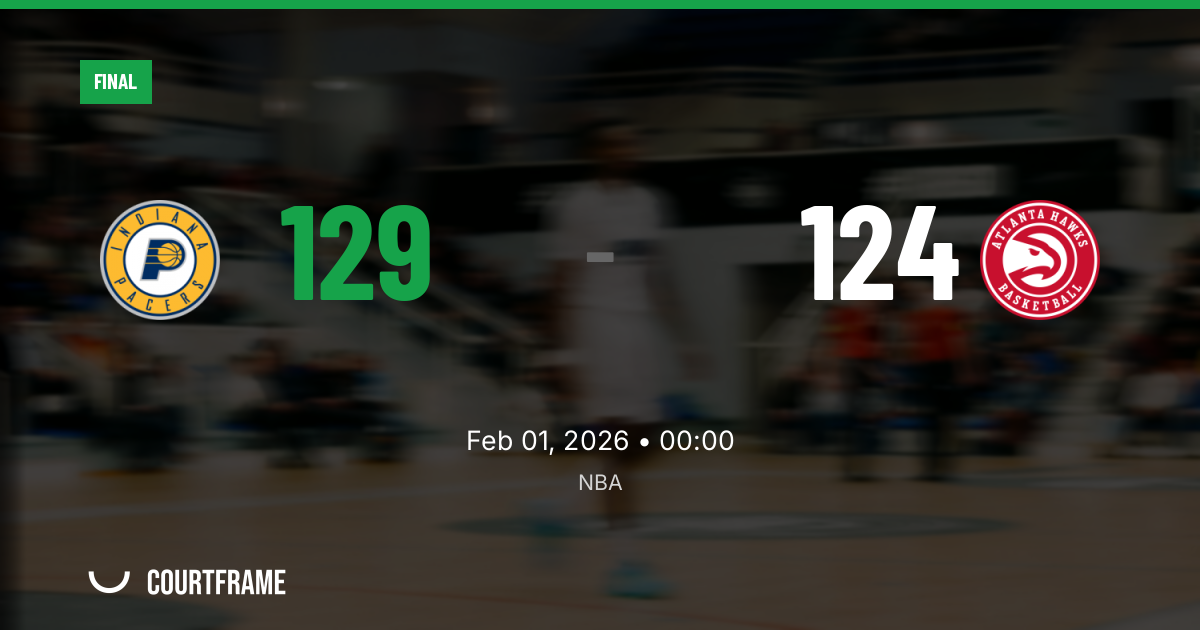
Indiana didn’t win this game with a slow burn. The Pacers detonated for a 45-point second quarter, built a cushion they could actually defend, and held off Atlanta 129-124 on Feb. 1, 2026 at Gainbridge Fieldhouse.
The Pacers entered at 13-36 (WWLWL) and the Hawks at 24-27 (LLWWW), but the night’s defining stretch didn’t care about records. Indiana’s second-quarter avalanche turned a high-scoring track meet into a game Atlanta spent the rest of the night chasing.
How the game swung
Atlanta came out firing, hanging 39 in the opening quarter to take a 39-35 lead. Indiana responded with the knockout swing in the second: 45 points, a +11 margin in the period, and a 80-73 halftime advantage after both teams traded haymakers early.
From there, the Pacers’ job was to manage the math. The Hawks won the third quarter 27-23, trimming the margin to three possessions, and kept coming in the fourth. But Indiana’s 26-24 edge in the final period was enough to keep the lead intact and close the door without overtime.
Possession battle: Indiana’s ball movement shows up
With shooting splits not available, the clearest separator in the team stats was playmaking. Indiana finished with 29 assists to Atlanta’s 25, a meaningful gap in a five-point game where each clean look mattered.
In a contest that regularly flirted with breaking open, Indiana’s ability to generate assisted offense helped stabilize the scoring when Atlanta’s pressure rose in the second half. The Pacers didn’t need to win every quarter — they needed to keep producing efficient possessions, and the assist margin points to how they did it.
Turning point
The second quarter. Atlanta’s 39-point first suggested the Hawks had the offensive rhythm to control the night, but Indiana’s 45-point response didn’t just swing the scoreboard — it changed the game’s geometry. From that moment, Atlanta’s margin for error disappeared, and every run became a requirement rather than an option.
What it means going forward
For Indiana, this is the kind of win that can anchor confidence even in a difficult season. The Pacers proved they can absorb an early barrage, win the playmaking battle, and execute just enough late to secure a 129-124 finish.
For Atlanta, the loss is a reminder that explosive starts don’t count for much without sustained defensive control. The Hawks put up 124 and still walked out short — the second-quarter collapse set a standard they couldn’t quite meet over the final 24 minutes.