

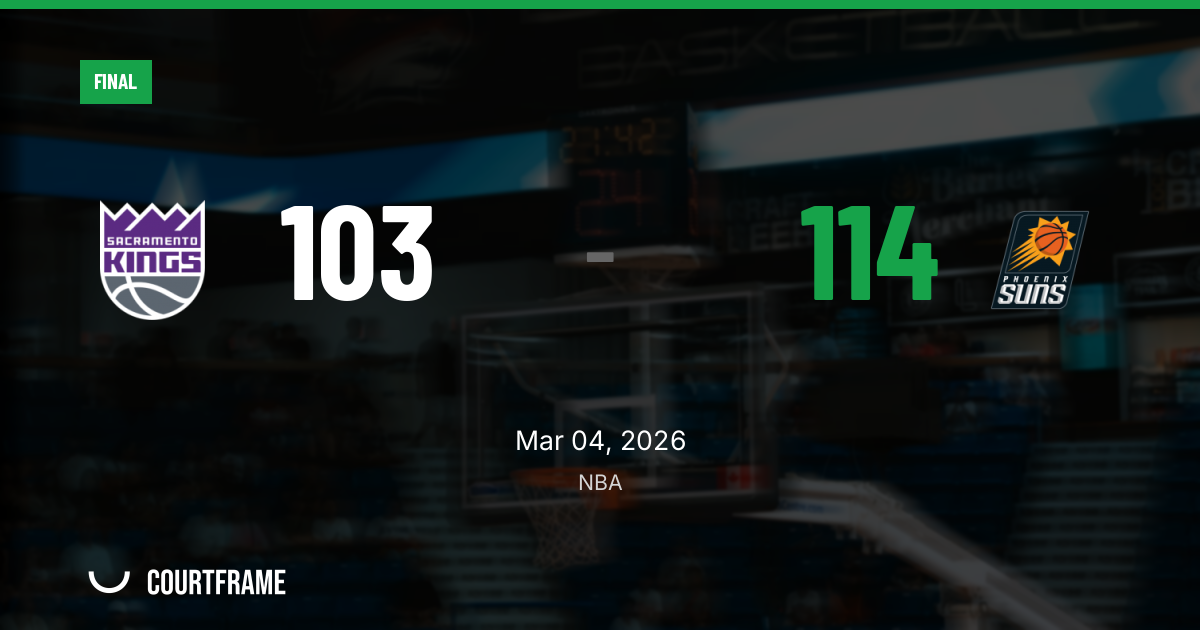
Phoenix walked into Golden, absorbed Sacramento’s early punch, then dictated the game the rest of the way. The Suns beat the Kings 114-103 on March 4, 2026, using a massive second quarter to seize control and enough composure late to keep a Kings push from turning into a real threat.
How the game swung
Sacramento looked ready to flip the script early, winning the first quarter 30-22 and setting a tempo that briefly put Phoenix on its heels. Then the game turned in the second: the Suns exploded for 37 points while holding the Kings to 25, flipping an eight-point deficit into a lead they wouldn’t relinquish.
That second-quarter burst wasn’t a one-off. Phoenix doubled down after halftime, taking the third quarter 31-20 to build separation. Sacramento won the fourth 28-24, but the damage was already done—Phoenix had created enough margin to manage the finish.
The numbers that told the story
Assists and offensive organization
Phoenix finished with 31 assists, a clear marker of a connected offense that consistently generated advantages. Sacramento had 25 assists, but the gap reflected the difference in shot creation quality and how often each team played from an organized base versus scrambling to manufacture offense late in possessions.
Quarter-by-quarter control
The Suns won three of the four quarters, and the two middle frames were the separator. Over the second and third quarters combined, Phoenix outscored Sacramento 68-45—effectively the game.
Turning points
Second-quarter avalanche: Sacramento’s first-quarter edge evaporated when Phoenix’s 37-point second quarter tilted the floor. The Suns’ ability to change the game’s rhythm—turning a deficit into a working lead—set the tone for the rest of the night.
Third-quarter squeeze: Any chance of a Kings reset after halftime disappeared in the third. Phoenix’s 31-20 advantage out of the break pushed the contest into “play-from-ahead” territory, where execution and spacing tend to win out.
Late Kings push, early Suns cushion: Sacramento’s fourth-quarter win showed some fight, but Phoenix’s earlier control meant the Suns could trade possessions and protect the margin.
What it means going forward
For Phoenix (35-26), this was a professional road win built on structure—winning the possession battle through organization and passing, and taking over the game during the highest-leverage stretch (the second and third quarters). For Sacramento (14-49), the first quarter was proof of concept, but sustaining that level across 48 minutes remains the challenge—especially when opponents raise the execution level after the initial wave.