

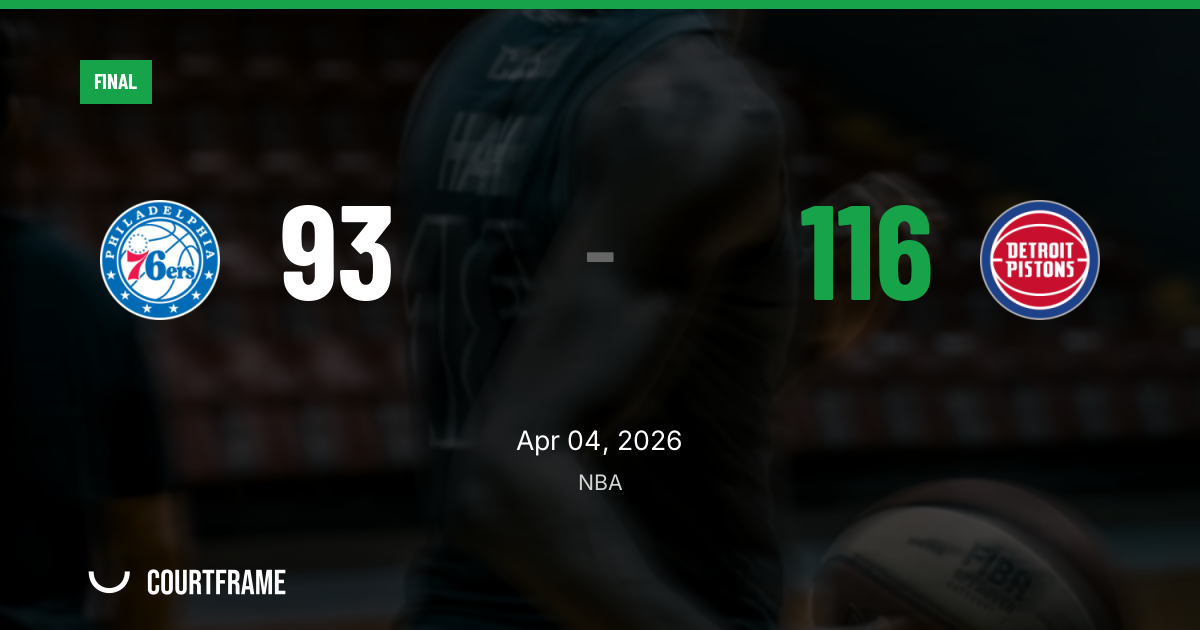
Detroit set the tone immediately — and never let it go.
Behind a 41-point first quarter and a steady diet of quick decisions, the Pistons (56-21) handled the Philadelphia 76ers (43-34) 116-93 on April 4, 2026 at Xfinity Mobile Arena. The margin was decisive, but the separation came from process: Detroit’s 33 assists overwhelmed a Philadelphia offense that produced just 17.
How the game swung
The opening 12 minutes were the game. Detroit’s 41-31 first quarter wasn’t just a hot stretch — it was a blueprint. The Pistons played fast, created advantages early in the clock and consistently turned those advantages into shots for teammates. Philadelphia stayed in touch on the scoreboard through the first half, but the underlying shape of the game was already tilting.
Detroit kept stacking points in the second (30-29) to take a 71-60 lead into halftime. From there, the Pistons managed the game with control rather than fireworks, winning the third quarter 24-21 and then closing with a 21-12 fourth that turned a competitive night into a rout.
Ball movement was the separator
Detroit’s 33 assists were the clearest signal of who dictated terms. The Pistons repeatedly forced Philadelphia into rotations, then punished late help with the extra pass. It wasn’t just about creating open looks — it was about keeping the 76ers in constant decision-making mode, which drained the margin for error as the game wore on.
On the other end, Philadelphia’s 17 assists reflected a more stagnant profile. The 76ers struggled to generate the kind of chain reactions that lead to easy offense, and when the game tightened in the middle quarters, they couldn’t manufacture the quick, connected possessions needed to put real pressure on Detroit’s lead.
Quarter-by-quarter: Detroit’s early punch, late clamp
First quarter: 41 points and immediate control
Detroit’s 41-point opening quarter created instant leverage. Philadelphia scored 31, but it still felt like it was chasing.
Second quarter: Philly hangs around, Pistons keep the edge
The 76ers matched the energy enough to keep the halftime deficit manageable, but Detroit’s 30 points ensured the lead stayed intact.
Third quarter: No comeback window
Philadelphia needed a swing quarter and didn’t get it. Detroit’s 24-21 third kept the game in the Pistons’ preferred script.
Fourth quarter: Detroit closes the door
The Pistons’ 21-12 finish was the final statement — a controlled close that pushed the final out to 23.
What it means going forward
Detroit’s win reinforced why it’s operating from a position of strength late in the 2025-26 season: it can win with pace early, then win with execution late. The assist gap — 33 to 17 — underscored a team that’s generating offense through structure rather than individual rescue possessions.
For Philadelphia, the loss was a reminder that the margin gets thin against elite opponents when the offense can’t consistently create advantages that lead to movement. At 43-34, the 76ers will need more connectivity — and more playmaking flow — to avoid games turning into long stretches of tough, low-assist possessions.