

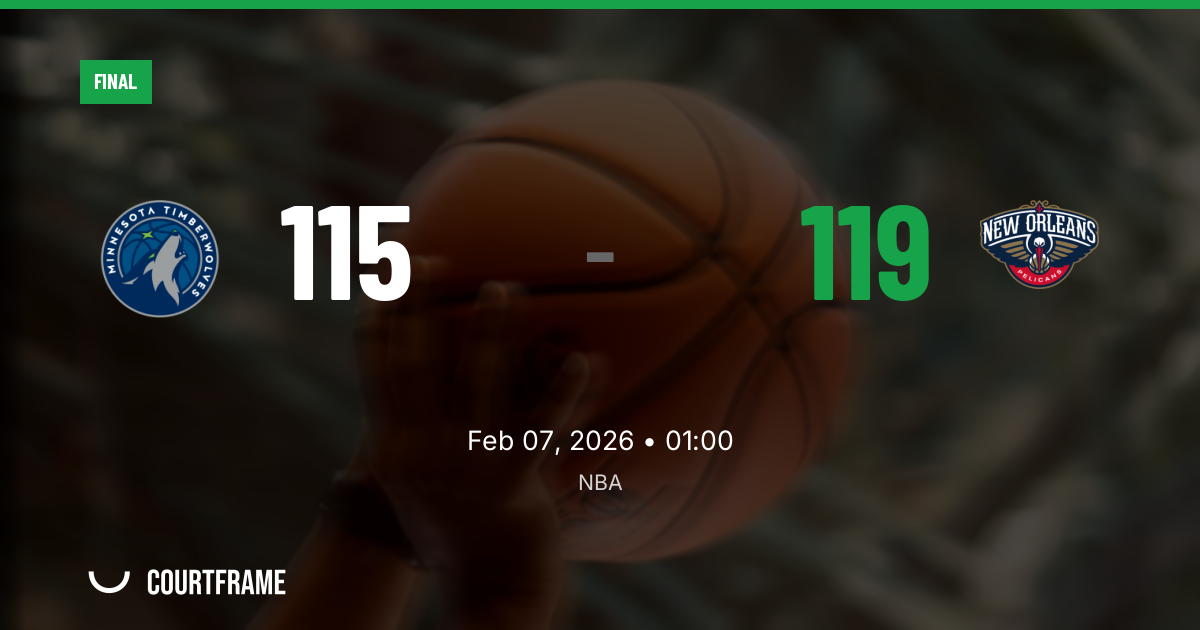
New Orleans walked into Target Center with a 14-40 record and walked out with one of its sharper road wins of the season — a 119-115 upset of the 32-21 Timberwolves on Feb. 7.
The Pelicans didn’t win it with a single knockout punch. They won it by steadily turning the game toward their terms: cleaner offense, more connected passing, and a second-half scoring profile Minnesota couldn’t match. New Orleans finished with 29 assists to Minnesota’s 22, a gap that showed up most when the game tightened late.
How the game swung
Minnesota looked in control at halftime. The Timberwolves followed a tight first quarter (New Orleans led 34-32) by ripping off a 38-point second quarter to take a 70-56 lead into the break. For a team that entered in solid form (LWLWW), it had the feel of a routine home win.
Then the floor tilted.
New Orleans opened the third quarter with urgency and pace, winning the period 33-24 to slice the deficit to five. That stretch changed the geometry of the game: Minnesota’s margin for error disappeared, and every empty trip became magnified.
Fourth-quarter finish: Pelicans close, Wolves stall
The Pelicans carried the momentum into the fourth and finished the job with a 30-21 closing quarter. Minnesota managed just 21 points in the final 12 minutes after scoring 70 in the first half — a dramatic shift in efficiency and flow that defined the result.
In a one-possession game late, New Orleans’ ability to generate assisted looks mattered. Their 29 assists weren’t just a nice number — they were the mechanism that kept the offense organized when the game got tight.
Key numbers
- Final: Pelicans 119, Timberwolves 115
- Halftime: Timberwolves led 70-56
- Third quarter: Pelicans won 33-24
- Fourth quarter: Pelicans won 30-21
- Assists: Pelicans 29, Timberwolves 22
What it means going forward
For New Orleans, this is the template: win the possession battle with connectivity, keep the ball moving, and give yourself a chance late even when the early game script goes sideways. For Minnesota, it’s a reminder that big second quarters don’t cash the check by themselves — not when the second half turns into a grind and the offense can’t maintain its structure.
The Timberwolves will feel this one because of the context: a home game against a team well below .500, and a 14-point halftime lead that didn’t survive the third-quarter shift. New Orleans earned it by being the steadier team when the game demanded it most.