
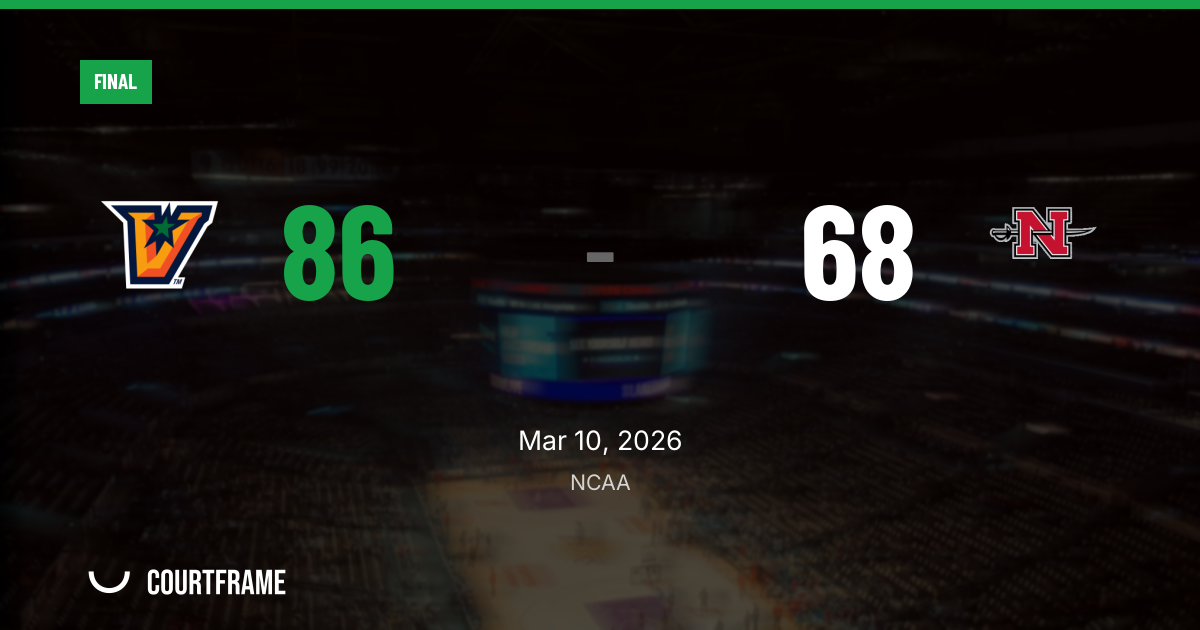
UTRGV didn’t leave much room for drama on March 10, 2026, rolling past Nicholls State 86-68 at a venue listed as TBD. The Vaqueros (18-12) led 44-32 at halftime and never let the game tilt back, stacking a second-half 42-36 finish to close out a comfortable NCAA win.
How it happened
The game’s shape was established early and reinforced after the break. UTRGV’s 44-point first half created separation, then the Vaqueros kept the pressure on with 42 more after halftime. Nicholls State (14-19) scored 32 in the first half and 36 in the second, but the gap never meaningfully narrowed as UTRGV consistently answered.
Turning point: UTRGV’s halftime cushion held firm
Up 12 at the break, UTRGV avoided the one thing that can resurrect an underdog: a quick post-halftime swing. Instead, the Vaqueros matched Nicholls State’s second-half pace and effectively traded possessions while protecting a double-digit margin—exactly the kind of game management that turns a lead into a result.
By the numbers
Halftime: UTRGV 44, Nicholls State 32
Final: UTRGV 86, Nicholls State 68
Second half: UTRGV 42, Nicholls State 36
What it means going forward
For UTRGV, the win reinforces a strong late-season profile at 18-12 and keeps momentum aligned with a recent run that included three straight wins before a loss, followed by another win. For Nicholls State, now 14-19, the challenge remains finding consistency—especially against teams capable of building early separation and then playing a clean, controlled second half.