
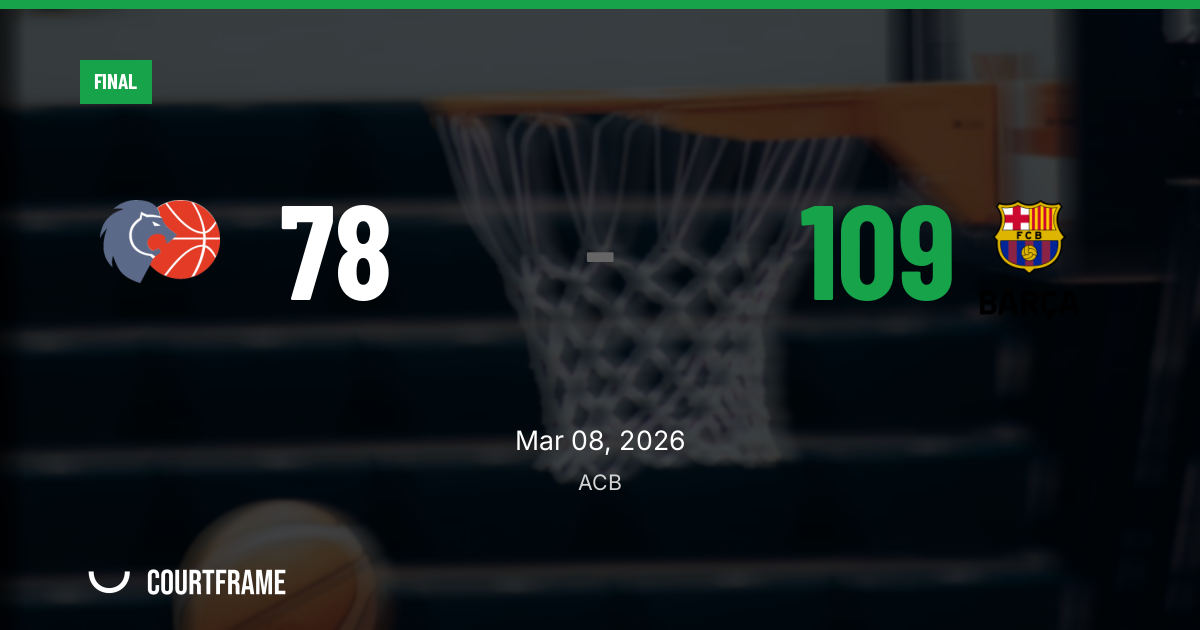
Barcelona didn’t leave any room for suspense in Lugo. On March 8, 2026, the visitors detonated the game in the first 20 minutes and rolled past Breogán 109-78 at Pazo dos Deportes, a result that matched the scoreboard to the flow: one team dictating every possession, the other chasing it.
Game flow: a 26-point halftime hole decided it
Breogán’s margin for error was thin against a Barcelona side that arrived with a 15-6 record, and it disappeared almost immediately. Barcelona’s 27-13 first quarter set the tone — pace, spacing, and decisive execution — and the second quarter only widened the gap (30-18). By halftime, it was 57-31, and the game had effectively shifted from competition to damage control.
Barcelona kept the pressure on coming out of the break, winning the third quarter 26-11 to stretch the lead to 83-42. Breogán finally found some offensive rhythm in the fourth (36 points), but it functioned as a cosmetic rally rather than a real comeback threat, with Barcelona matching them at 26 to close out the 109-78 final.
The separator: ball movement and control
The clearest statistical gap was in playmaking. Barcelona finished with 25 assists to Breogán’s 15, a telling indicator of how clean the visitors’ offense was and how often they turned advantages into high-quality looks. With that kind of assist edge, Barcelona consistently forced Breogán into rotations and made them pay before the defense could reset.
Turning point: the opening punch
Breogán never recovered from the first quarter. Falling behind by 14 after 10 minutes put them in a constant uphill sprint, and Barcelona’s second-quarter surge slammed the door: the gap ballooned to 26 at the half, removing any realistic path back without a sustained run on both ends — something Barcelona didn’t allow.
What it means going forward
For Barcelona, the win reinforces a blueprint that travels: share the ball, keep the game organized, and stack winning quarters early. For Breogán, now 8-13, the urgency only increases. The late fourth-quarter scoring showed life, but the first three quarters highlighted the bigger issue — they can’t afford to spot elite opponents a massive early deficit and expect to survive it.