

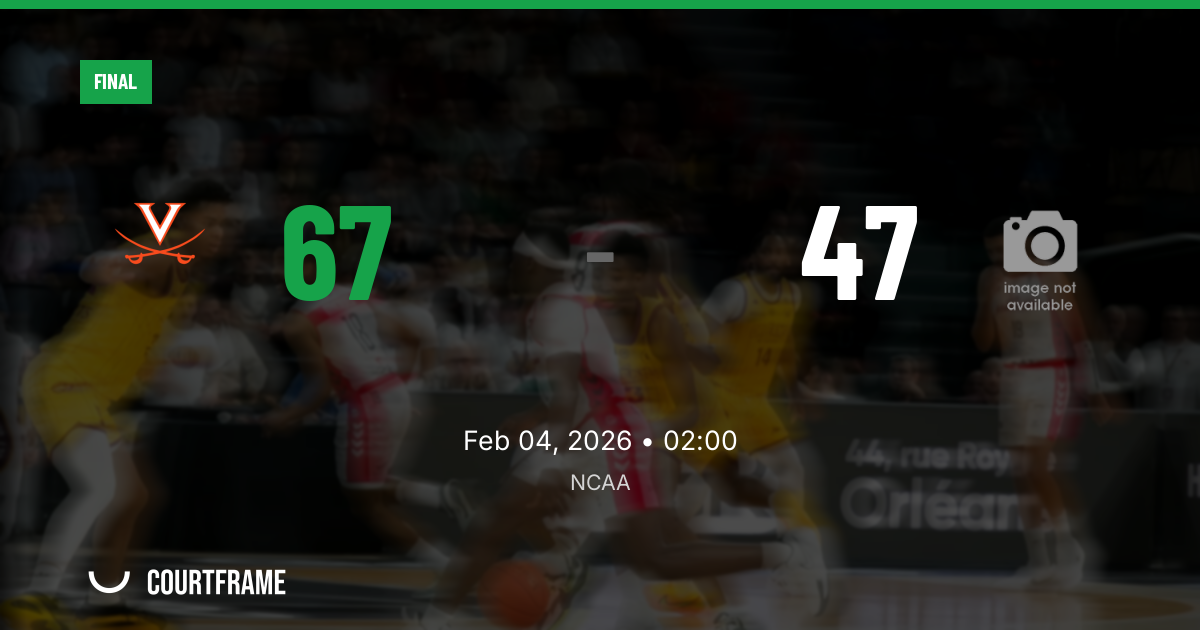
Virginia didn’t leave much to debate on February 4, 2026. The Cavaliers, carrying an 18-4 record and a WWLWW run of form, overwhelmed Pittsburgh 67-47 in a wire-to-wire type of performance that felt decided by the middle portion of the game.
Pittsburgh arrived at 9-13 and in LWLLL form, and the gap between the teams showed up in the final margin: Virginia won by 20, keeping the Panthers pinned to 47 points and never letting the game drift into late-game volatility.
Game flow: Virginia’s control from start to finish
With no quarter-by-quarter scoring available, the clearest indicator of how this played was the final: 67-47. That’s a defensive result first, and it underscores Virginia’s ability to impose structure—limiting Pittsburgh’s scoring opportunities and turning the night into a possession-by-possession grind that favored the more stable team.
Turning point: when the margin stopped moving back
The key swing wasn’t a single shot; it was Virginia’s sustained ability to keep Pittsburgh from generating enough points to mount a run. Once the Cavaliers created separation, the Panthers never found the offensive traction to shrink the game into a two-possession situation. The 20-point final speaks to a contest where every attempted push met resistance.
What it means going forward
Virginia
At 18-4 after the win, Virginia continues to look like a team with a reliable floor. A 20-point victory built on holding an opponent to 47 points reinforces the Cavaliers’ identity: they can win games without needing a shootout, and they can turn an opponent’s cold stretch into a full-night problem.
Pittsburgh
For Pittsburgh, now 9-13, the loss extends a rough stretch reflected in its LWLLL form. Getting held to 47 points is the kind of offensive output that leaves little margin for anything else, and it puts added pressure on the Panthers to find more consistent scoring pathways quickly as the season moves deeper into February.
Final
Virginia 67, Pittsburgh 47 — Venue: TBD