

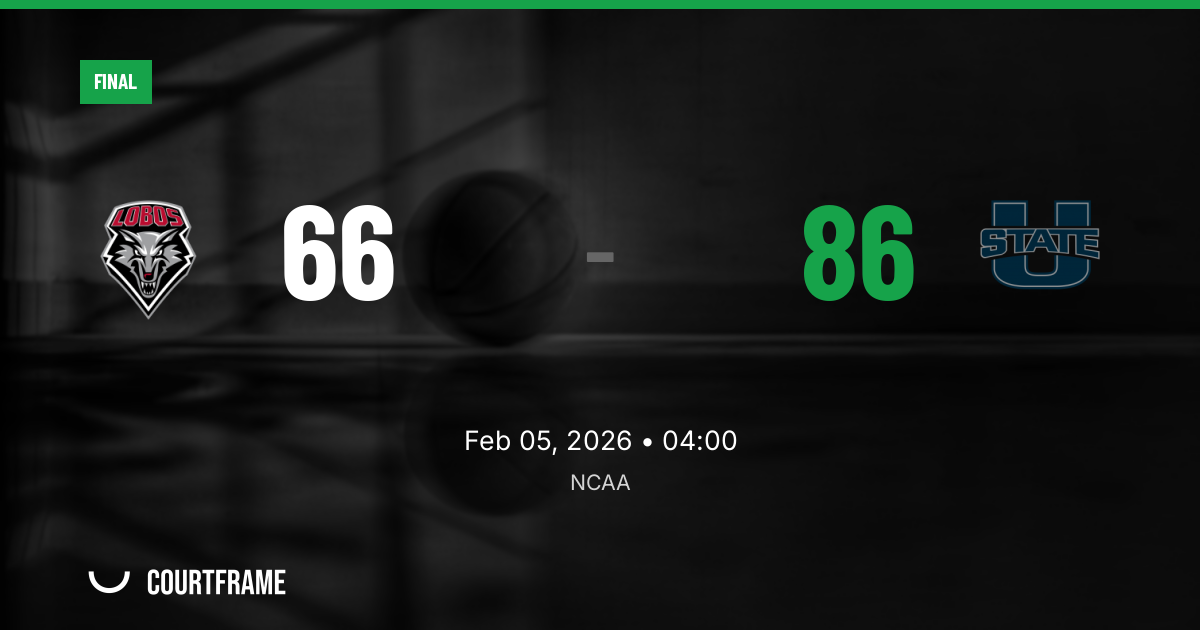
Utah State didn’t just win in Albuquerque — it made a statement. The Aggies (18-3) walked into a matchup of Mountain West heavyweights and ran away with an 86-66 victory over New Mexico (18-4) on Thursday, flipping a three-point halftime edge into a 20-point final.
How it happened
The first 20 minutes looked like the game everyone expected: physical, efficient, and tight. Utah State led 36-33 at the break, with both teams trading punches and keeping the margin to one possession.
Then Utah State hit the accelerator. The Aggies exploded for 50 points after halftime, turning the game into a track meet on their terms. New Mexico matched its first-half output with 33 in the second, but it wasn’t close to enough to keep pace once Utah State’s offense found another gear.
The turning point: a second-half avalanche
With the game sitting at 36-33 at halftime, the margin for error was thin. Utah State erased it quickly. By dropping 50 in the final 20 minutes, the Aggies effectively ended any chance of a New Mexico comeback — not with one decisive play, but with sustained scoring pressure that widened the gap possession by possession.
Team-level takeaway
Utah State’s path to the win was clear in the split: win a close first half, then separate with offense. The Aggies outscored New Mexico by 17 in the second half (50-33), the kind of post-halftime surge that travels and translates in conference play.
For New Mexico, the issue wasn’t a collapse so much as an inability to change the game’s temperature. The Lobos stayed steady at 33 points in each half, but Utah State’s second-half scoring spike forced New Mexico to play from behind without the stops needed to create real pressure.
What it means going forward
Utah State improves to 18-3 and extends its push near the top of the league, adding a road win over an 18-win New Mexico team that entered in strong form. The Aggies’ ability to create separation after halftime is the kind of trait that defines contenders.
New Mexico falls to 18-4, a result that tests the Lobos’ recent run and puts a premium on their response in the next one. Against teams that can score in waves, matching efficiency isn’t enough — controlling pace and generating second-half stops becomes non-negotiable.