
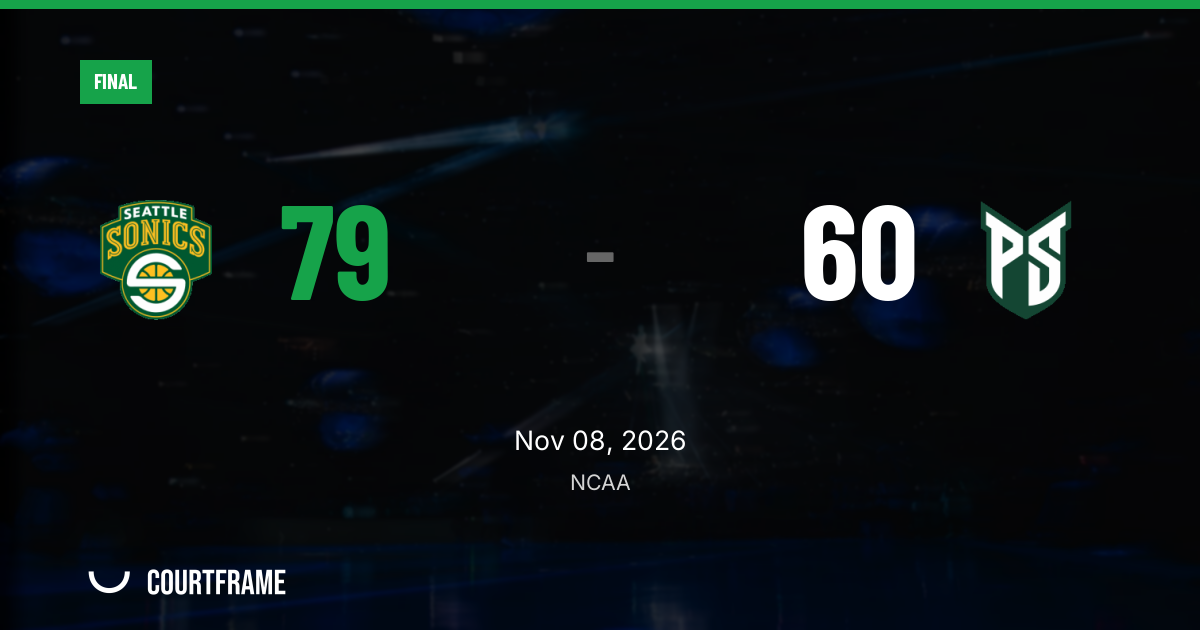
Seattle beat Portland State 79-60 on November 8, using a 19-point margin to move to 1-1 in the 2026-2027 NCAA season. Portland State fell to 1-1 after opening the season with 111 points, but Seattle held the visitors to 60 in a game that reversed the early statistical picture around both teams.
The matchup entered with Portland State at 1-0 and Seattle at 0-1. Portland State had scored 111 points in its opener, while Seattle had averaged 73 points through its first game. Seattle’s 79-point performance exceeded its early scoring mark, while Portland State finished 51 points below its opening output.
Seattle flips the matchup indicators
The pregame profile pointed toward Portland State. Portland State entered with a CourtFrame Power Index of 70.00 and a national rank of 13, while Seattle entered with a CourtFrame Power Index of 0.00 and a rank of 359. The 70-point CPI differential favored Portland State, but Seattle controlled the scoreboard and won by nearly 20 points.
The market also leaned heavily toward Seattle by implied probability, with the home side carrying an 81.6 percent chance compared with 18.4 percent for Portland State across seven bookmakers. The final score aligned with that home-side expectation but not with Portland State’s stronger CPI standing or its 1-0 start.
Seattle’s home split also held. The Redhawks entered with a 1-0 home mark and an average of 79 points in that setting, then landed exactly on 79 against Portland State. Portland State’s away split moved to 0-1, with its road scoring average at 60 after this result.
Portland State’s offense comes back to earth
Portland State’s offensive drop-off defined the game. After scoring 111 points in its opener, Portland State managed 60 against Seattle. Without quarter-by-quarter scoring available, the total still makes the shape of the game clear: Seattle prevented Portland State from reproducing the pace and shot-making profile that had carried its first win.
Seattle’s defensive performance mattered because Portland State entered as the more explosive early-season offense. Holding the Vikings to 60 changed the game’s math and removed the margin for Portland State to survive a standard Seattle scoring night.
Rest and availability created an even setup
Neither team had a significant injury listed, so the result was not shaped by a major availability imbalance. Seattle and Portland State each had four days of rest and each had played one game in the previous seven days, creating a comparable schedule setup.
That context makes Seattle’s control more meaningful. The Redhawks did not benefit from a clear rest advantage or an injury gap. They won the game through execution and defensive containment, holding Portland State to 60 while reaching the same 79-point mark reflected in their early home performance.
What the result means
Seattle’s win brings its record to 1-1 and gives the Redhawks a cleaner early-season baseline after an 0-1 start. The 79-point output matched their home scoring split, and the 19-point margin gives Seattle a stronger result than its initial CourtFrame Power Index standing suggested.
Portland State also moves to 1-1, but the offensive swing from 111 points to 60 creates the central question from this game. The Vikings entered with the stronger CPI profile and no injury concerns, yet Seattle dictated the scoring environment and turned the matchup into a comfortable home win.