

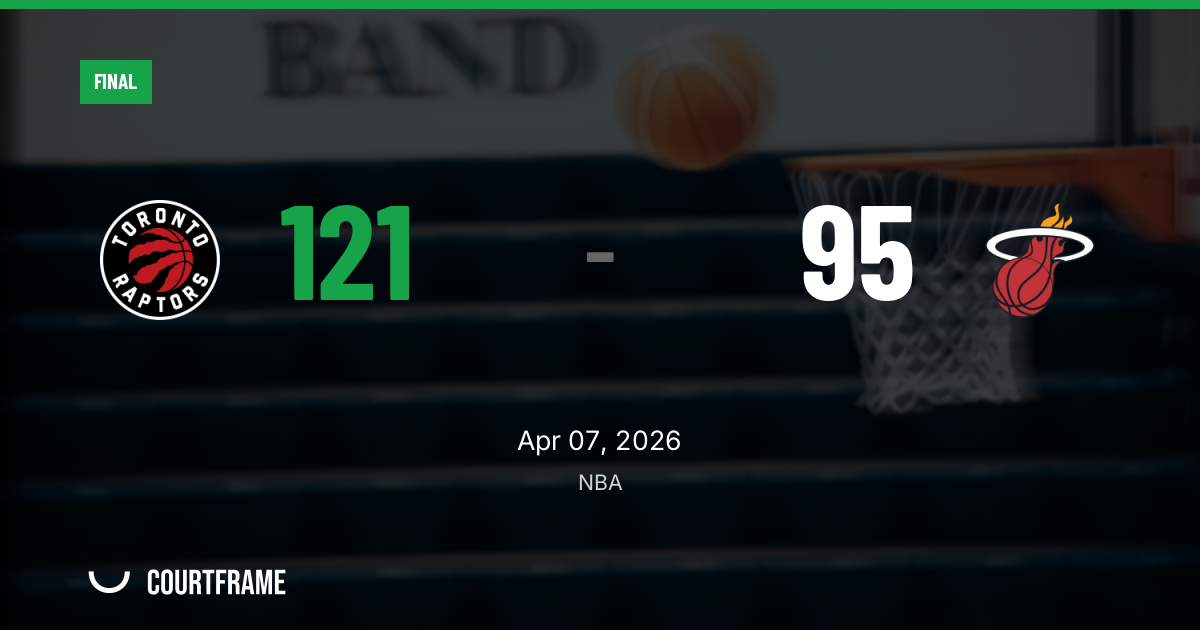
TORONTO — The Raptors didn’t make this complicated. They won the first quarter, won the second, and by the time the third quarter ended, the game was effectively over.
Toronto (44-35) smashed Miami (41-38) 121-95 on April 7 at Scotiabank Arena, controlling all four quarters and turning consistent shot creation into separation that kept growing. The Raptors led 32-27 after one, stretched it to 64-51 at halftime, then slammed the door with a 30-25 third quarter before finishing with a 27-19 fourth.
Game flow: Toronto’s lead kept stacking
Miami hung around early, matching the pace enough to stay within five after the opening 12 minutes. But the second quarter was the pivot: Toronto matched its first-quarter output with another 32 points, while the Heat couldn’t keep up offensively. That 13-point halftime margin became a 18-point gap after three, then ballooned in the fourth as Toronto continued to generate clean looks and Miami’s scoring dipped again.
The separator: Assist gap told the story
Toronto’s offense was organized and connected — 34 assists as a team — and it showed in the way the Raptors repeatedly manufactured advantages without needing hero-ball possessions. Miami finished with 26 assists, but the Heat couldn’t match Toronto’s volume of quality creation over four quarters.
Quarter-by-quarter turning points
Second quarter: The game tilts
Toronto’s 32-24 second quarter was the stretch that changed the tenor. The Raptors’ lead expanded from five to 13, and Miami spent the rest of the night trying to climb out of a hole that only got deeper.
Fourth quarter: The knockout
With the game still technically within reach entering the fourth, Toronto closed with a 27-19 final period. Miami’s offense stalled, and the Raptors turned the last 12 minutes into a controlled finish rather than a coin-flip closing time.
What it means going forward
For Toronto, this was a statement win in the stretch run: a complete, four-quarter performance that looked sustainable because it was built on ball movement and consistent scoring across every period.
For Miami, the loss is a reminder of how thin the margin becomes when the offense can’t keep pace for full quarters. The Heat were competitive early, but once Toronto started stringing together stops and turning possessions into assisted offense, the game drifted out of reach quickly.