

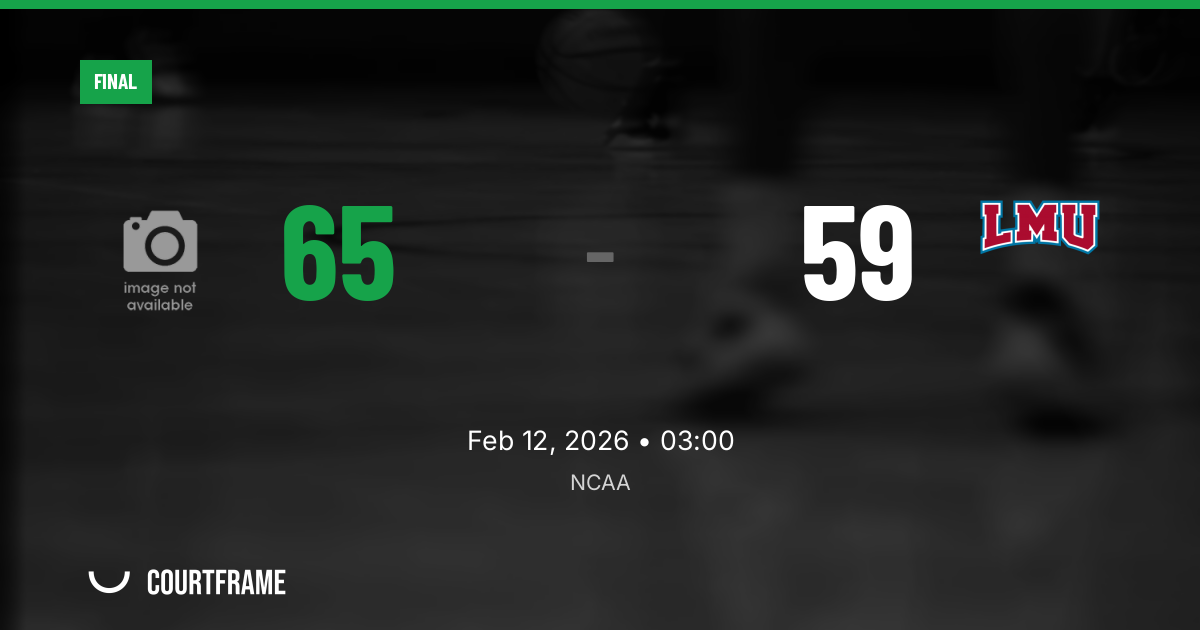
Pacific didn’t win this one with a steady climb — it won it with a jolt. Down 31-25 at halftime, the Tigers flipped the game on its head with a 40-point second half and pulled away from Loyola Marymount for a 65-59 win on Feb. 12, 2026.
The result pushes Pacific to 17-10 and keeps its recent form trending in the right direction. For LMU, now 13-14, it’s another missed opportunity in a stretch that’s offered little margin for error.
Game flow: a halftime deficit turns into a Pacific finish
Loyola Marymount did the early work on the scoreboard, taking a 31-25 lead into the break behind a cleaner, more controlled first half. But the second half belonged to Pacific — not by inches, but by possessions.
Pacific’s 40-28 edge after halftime was the difference. The Tigers didn’t just catch LMU; they created separation, turning a six-point hole into a six-point win.
Turning point: the second-half swing
The defining swing arrived after halftime. LMU scored 28 points in the second half — a respectable output — but it wasn’t enough to withstand Pacific’s surge. When Pacific hit 40 after the break, the math became unforgiving: LMU needed to match a pace it couldn’t sustain.
That second-half scoring gap (40-28) captures the story: Pacific found another gear, and LMU didn’t.
What it means going forward
For Pacific, this was a quality win built on responsiveness. The Tigers didn’t panic after a slow first half; they solved the game in real time and finished with the kind of second-half punch that travels.
For Loyola Marymount, the frustration is familiar: a halftime advantage that didn’t convert into a road win. At 13-14, LMU’s path forward hinges on sustaining execution through the final 20 minutes — because against teams like Pacific, one strong half doesn’t hold up.