

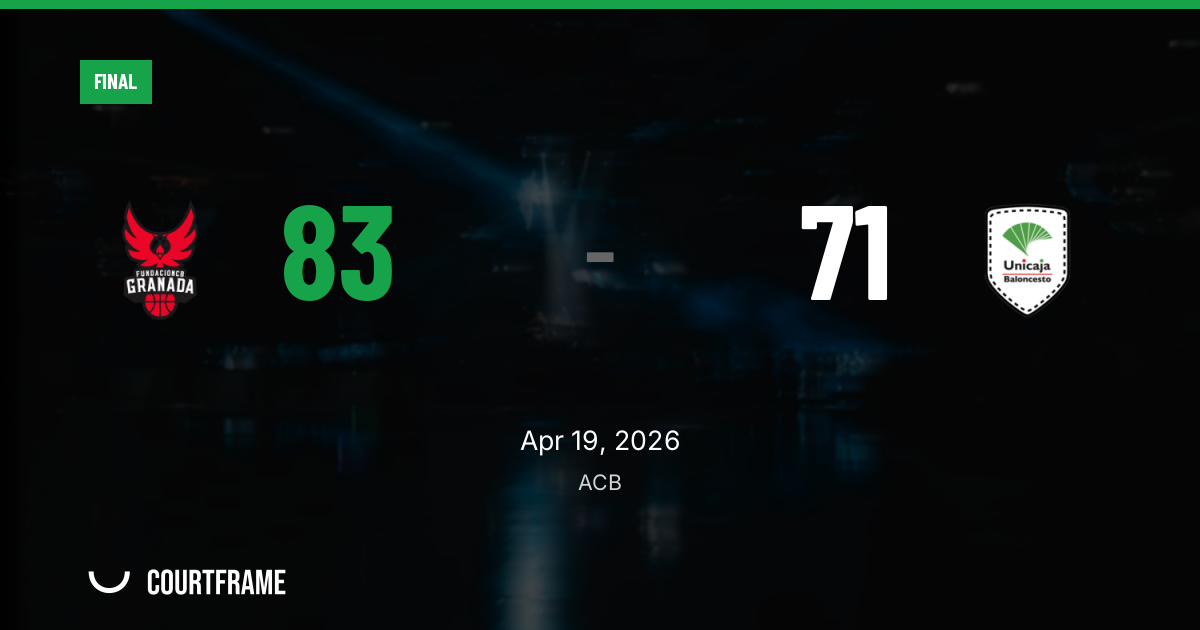
Granada didn’t wait for the game to settle. It hit Unicaja with a 24-9 first-quarter punch and never gave the night back, closing out an 83-71 win Saturday in ACB regular-season play at Palacio de Deportes.
On paper, the matchup leaned heavily to Unicaja: a 15-12 record, a stronger CPI profile (43.51, ranked 9th) and market pricing that implied a 74.7% win probability. But Granada (4-23) owned the opening margin, controlled the glass, and turned the game into a possession-by-possession grind that Unicaja couldn’t solve.
The game swung in the first 10 minutes
The quarter scores tell the story. Granada’s 24-9 first quarter created a 15-point cushion that functioned like a moat the rest of the night:
- Q1: Granada 24, Unicaja 9
- Q2: Unicaja stabilized (22-17), but still trailed at halftime
- Q3: Granada answered with its best period (26 points) to keep separation
- Q4: Unicaja’s 18 wasn’t enough to mount real pressure
Even as Unicaja found more rhythm after the opening shock, Granada kept winning the “next segment,” especially coming out of halftime. That third-quarter 26 was the kill switch — not a knockout, but enough to prevent any late-game math from getting interesting.
Granada’s edge: extra possessions and a steady shot diet
Granada’s clearest advantage was on the glass. It finished with 39 rebounds to Unicaja’s 23, a decisive disparity that helped offset Granada’s 20 turnovers. In a game where both teams coughed it up (Unicaja had 16 turnovers), Granada’s rebounding margin provided the stabilizer: missed shots didn’t always end possessions, and Unicaja couldn’t consistently finish defensive stands with rebounds.
Granada also leaned into shot-making from deep and consistent pressure at the line. The team totals show a profile built around spacing and free throws:
- Granada: 11/24 from three, 26/33 at the line
- Unicaja: 9/29 from three, 18/24 at the line
That combination — threes plus free throws — is a clean way to build efficient scoring without needing elite half-court creation on every trip. Granada didn’t have to be perfect; it just had to keep manufacturing points while its defense protected the early lead.
Unicaja’s problem: too many empty trips, not enough connectivity
Unicaja’s recent form suggested fragility (it entered on a five-game losing streak), and the first quarter exposed it. The box score underscores the lack of offensive flow: 10 assists against 16 turnovers. That ratio is a red flag for any team trying to climb out of an early deficit, especially on the road.
Unicaja did generate points at the stripe (18/24) and hit nine threes, but the volume came with inefficiency and stalled possessions — too many trips ended without a clean look or a second chance. With Granada controlling the rebound battle, Unicaja’s misses were more likely to become Granada’s transitions into set offense rather than extended Unicaja pressure.
Defense and disruption kept Granada in control
This wasn’t a low-event game. Both teams were active defensively — Granada posted 10 steals to Unicaja’s 9, and Unicaja recorded 3 blocks to Granada’s 2. The difference is Granada survived its own mistakes because it consistently won the possession battle on the back end with rebounds, while Unicaja’s turnovers compounded the early scoring drought.
Context that mattered: rest was equal, pressure wasn’t
There were no significant injuries reported for either side, and both teams came in with identical scheduling conditions: seven days of rest and one game in the last seven days. That removed fatigue as an excuse and made the opening quarter even more damning for Unicaja — Granada simply brought sharper execution from the tip.
And while the records suggested a mismatch, Granada’s home split entering the game (3-3, averaging 83 points) hinted it could be more competitive in its building than its overall 4-23 mark implied. It hit that 83-point mark exactly in this one — and did it with a lead established early, not a late scramble.
What it means
Granada banked a rare win — and did it by playing a game that travels: win the first quarter, rebound everything, and keep scoring pathways open via threes and free throws. For Unicaja, the loss extends a skid that now includes another night where the offense couldn’t generate enough assisted structure to withstand early adversity.