

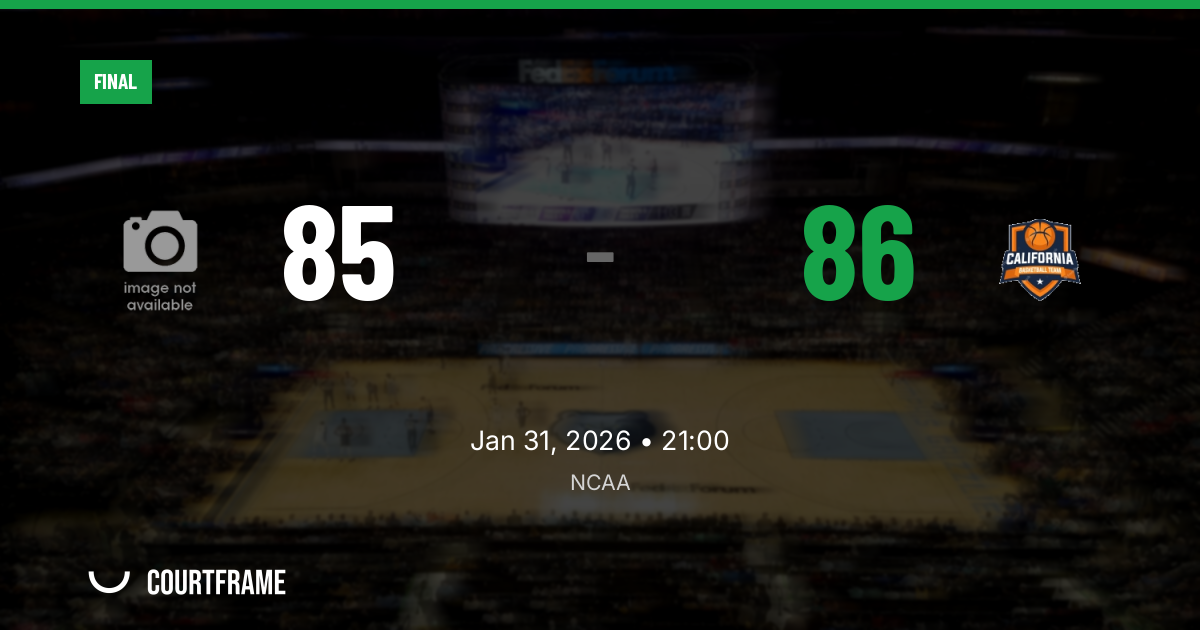
California walked out with the only number that mattered: an 86-85 win over Miami (FL) on January 31, 2026, in a one-point game that never gave either side much breathing room. The Bears (16-6) did just enough to outlast the Hurricanes (17-5), leaning on a slim halftime advantage and matching Miami possession-for-possession down the stretch.
How it happened
The separation came early — and then it basically disappeared. California took a 45-44 lead into halftime, then the teams played to a 41-41 tie in the second half. That meant the entire outcome hinged on Cal’s one-point edge at the break.
Miami didn’t fold, even with the game tightening into a half-court fight. The Hurricanes matched Cal’s 41 points after halftime, but couldn’t find the extra stop or extra score needed to flip the result. In a game without overtime, the math was unforgiving: split the second half evenly and the halftime margin becomes the final margin.
Turning point
Halftime. Not because the game slowed — it didn’t — but because it set the scoreboard trap. California’s 45-44 lead created a razor-thin runway. When the second half landed dead even at 41-41, Miami’s path to a comeback required winning late possessions outright. They never did.
What it means going forward
For California, this was the kind of road result that travels: win the first half, manage the second, and survive a one-possession finish. At 16-6, the Bears added a high-leverage closeout win that reinforces their ability to execute in tight games.
For Miami, now 17-5, this one stings because the formula was there. The Hurricanes played California even for 20 minutes after halftime, but the first-half deficit — just one point — proved decisive. With their recent form listed as LWWLL, the urgency is clear: clean up the margins early, because against teams like Cal, the second half can be a draw and still not be enough.
Final
California 86, Miami (FL) 85
Halftime: California 45, Miami (FL) 44
Second half: 41-41